
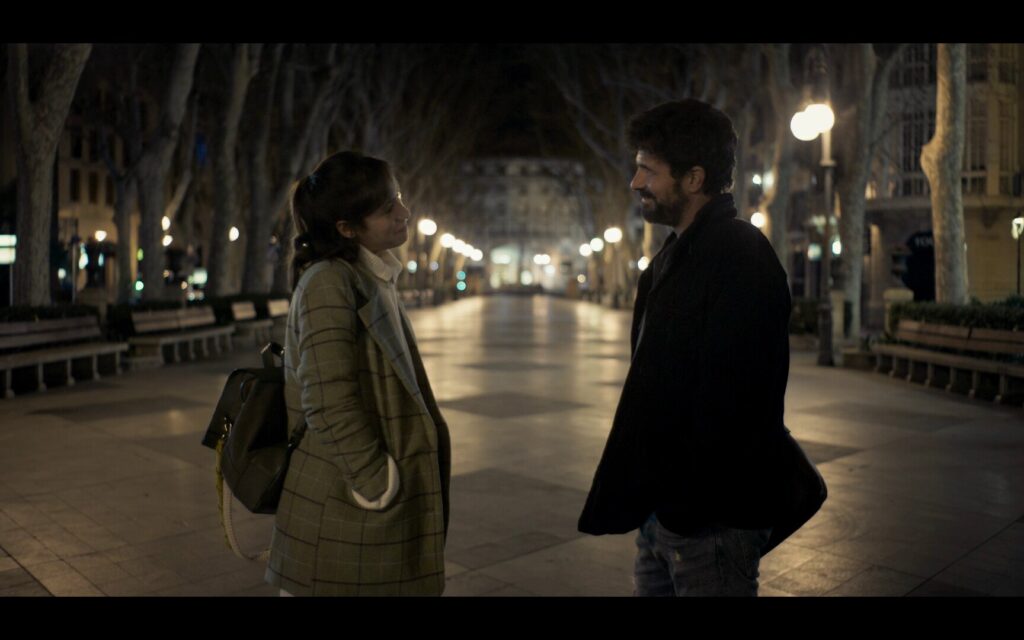
East Coast Premiere / Spain / 2024 / Spanish w/English subtitles / 112 min / Comedy, Drama
Director, Writer: Nick Igea; Writer: Elio Quiroga, Zebina Guerra; Producers: Nick Igea, Elisa Saldaña
Key Cast: Rodolfo Sancho, Ruth Gabriel, Natalia Verbeke, Roque Ruiz, Tábata Cerezo, Lluís Oliver, Toni-Lluís Reye. Contact: nickigea@gmail.com
SYNOPSIS – The students taking a film course, in a small city, have the dream of one day making movies. Their teacher, somebody who once sailed and wrecked that same objective years before, doesn’t ́want to get involved in their dreams and illusions so that they does not end up like the failure he feels that he has become.
Director Biography – Nick Igea
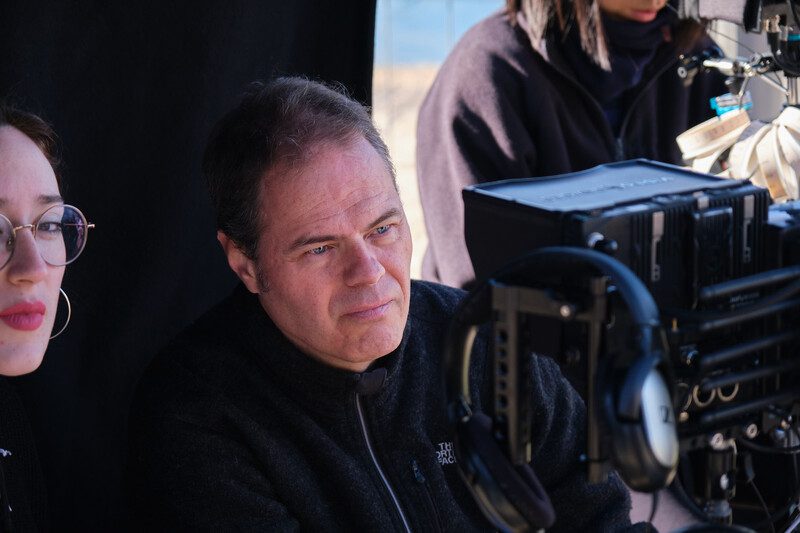
Born in Palma de Mallorca (Spain) in 1974. He studied cinema in Madrid. He has shot 4 short films as director, winning several international awards with them. He teaches cinema at Complutense University in Madrid. “A walk along the Borne” is his fist feature film as director.
Director Statement
This is, above all, a film of overcoming. I am a fan as a spectator of this type of films, whatever their theme, and they are the ones that have served as a reference when conceiving this story. From “Stand and deliver”, a film little known to the general public, by Ramon Menendez, that to me is the ABC of “classroom” movies, to “Hoosiers” or “The pursuit of Happiness”, going through others like “Dead poets society” o “The classroom”, by Laurent Cantet. The realism and naturalness of French cinema (Cantet, Audiard, Ozon, Rohmer, Dardenne brothers…) I have had them very much present at all times, without ever detaching myself, of course, from the Spanish reality.
Behind our story there is a clear social background. We want to show the most unknown part of Majorca: that of the people who live there and who work carrying suitcases at the airport or as waitresses in hotels and who, at the end of the season, go unemployed. We want to show what lies behind this idyllic tourism that, when it disappears, manifests itself so crudely.
Within a clear tone of “dramedia”, this is a positive film, which talks about impossible dreams and how people influence (and help) people. It is ultimately a film of people (with capital letters), made from the heart and showing a great love for cinema. Our story starts from a clear realism and leads to what could be almost a story thanks to that “why not?” on which we bet. All this converges in our purpose that the film leaves a good taste in the audience and a little (or rather a lot) of hope.
I think that in the context in which we live today the film can contribute to two things that are very important for us: On the one hand, in a clear vindication of cinema: that independent, auteur, European cinema. If even before the current situation this type of cinema, where our film is framed, relied on a very fragile environment, now runs the clear risk of disappearing.
And to this demand we add another: to watch the cinema in theaters. Many theaters in our country were closed temporarily, and some of them, the smaller ones, those where films like ours are exhibited, have definitely done so. In all this, the support of the institutions for this small, auteur and independent cinema is fundamental.
And the other thing we think our film can bring is hope. We need it. This is a positive film, as we have said, but not escapist because we do not intend to get out of reality. Because it is not necessary. Because around us there are hidden fairy tales, small stories of people who move us and who seem to be the fruit of magic or something similar. Of course you must fight, you must work, you have to put passion like the one that our protagonists put or like the one that we put when trying to bring forward our film… but things can be achieved. Why not? As a little story it is and within its humility, our film will be a sign that things are possible.