

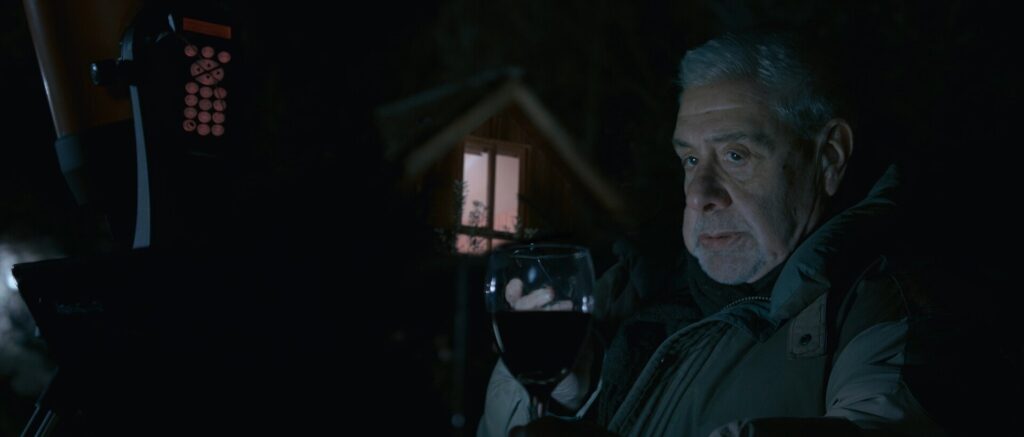

Chile / 2025 / Spanish w/English subtitles / 88 min / Drama, Mystery, Suspense
Director, Writer: Diego González; Writer: María Paz Gonzalez; Producers: Sergio Karmy.
Key Cast: Julio Jung, Francisca Lewin .
After a powerful earthquake, Catalina returns to her old family home to help her father, Domingo, sell the property following the sudden death of her uncle Héctor. Between them unfolds a space of mourning and reconciliation, marked by unresolved guilt and inherited silences. In their forced coexistence, cracks begin to reveal the shadow of Héctor —an absent figure who never truly left. Replicas is a drama of mystery and memory, where both seismic and human aftershocks threaten to bring down what little still stands.
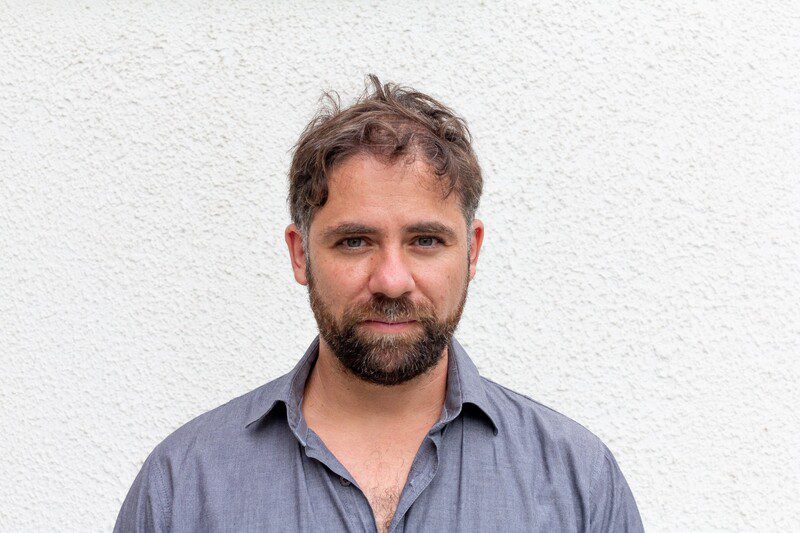
Director Biography – Diego Gonzalez
He was born in Santiago, Chile, in 1981. He began making short films during his university years, participating in Chilean and international festivals. He studied film at the Escuela de Cine de Chile and attended screenwriting seminars with Robert McKee and Patricio Guzmán, among others. He has also taught film appreciation and is currently promoting his feature film Replicas (2025).
Director Statement
Chile, one of the most seismically active countries in the world, lives with a constant awareness of instability. That physical fragility has become part of our emotional identity. In Aftershocks, this geographic condition symbolizes what we believe to be solid, yet when shaken over and over, it exposes what cannot be erased: the fractures that remain beneath the surface.
In this film, I wanted to explore fatherhood, grief, guilt, and shame as telluric forces that stir memory. Catalina and Domingo, daughter and father, confront what has been left unsaid —the dead, the memories, and the secrets that continue to shift within both their inner worlds and the physical space they inhabit. The house where the story unfolds is a living organism, a capsule of time that holds within its walls the vibration of what is no longer visible, yet inevitably rises from its hiding place.
The film’s visual language privileges observation and restraint. With a camera guided by precise movements and a contemplative rhythm, Aftershocks evokes classical cinema —the stillness before the quake. Its autumnal light and suspended spaces invite reflection on how we inhabit our losses, and how, in Chile, even when everything seems stable, the ground —and memory itself— never truly stops moving.