Broward Premiere / USA / 2025 / Czech, English, German, Hebrew, Polish, Yiddish / 88 min / Holocaust, Women, World War II
Director. Producer, Writer: Marisa Fox; Producers: Deborah Shaffer, Kelly Sheehan; Executive Producer: Deborah Oppenheimer; Director of Photography: Slawomir Grunberg, Dror Lebendiger; Editor: Rachel Reichman; Composer: Wendy Blackstone;
Key Cast: Emmanuelle Chriqui, Jen Cohn;
Sales: andrew.herwitz@filmsalescorp.com
Press: adam@the2050group.com
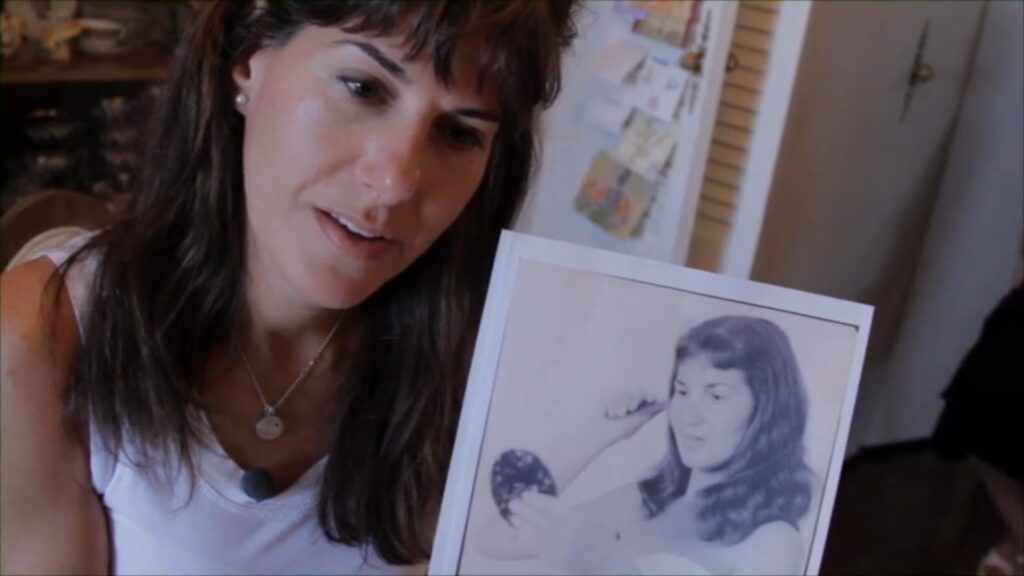
“You think you know your mother until you don’t,” says filmmaker Marisa Fox. Tamar was a New York doctor’s wife who claimed she fled her native Poland on the cusp of World War II and was never a Holocaust “victim.” Twenty years after her death, Fox, now a journalist and mother, learns Tamar had a secret identity and chases down leads that span the globe, uncovering a story of Nazi trafficking and a defiant band of sisters in a women’s forced labor camp. Dogged research, extraordinary archival imagery and staggeringly candid interviews reveal a portrait of a woman who dared to be the hero of her own story, transforming herself from Nazi slave to freedom fighter, from refugee to spy and saboteur, ultimately reinventing herself as a matriarch in America. A real-life story of a daughter coming to terms with a woman who went to extraordinary lengths not to be defined by trauma.
SPECIAL GUESTS: Marisa Fox
SPONSORED BY: Carole Solomon
& The Schwartz Family in loving memory of Janet Schwartz
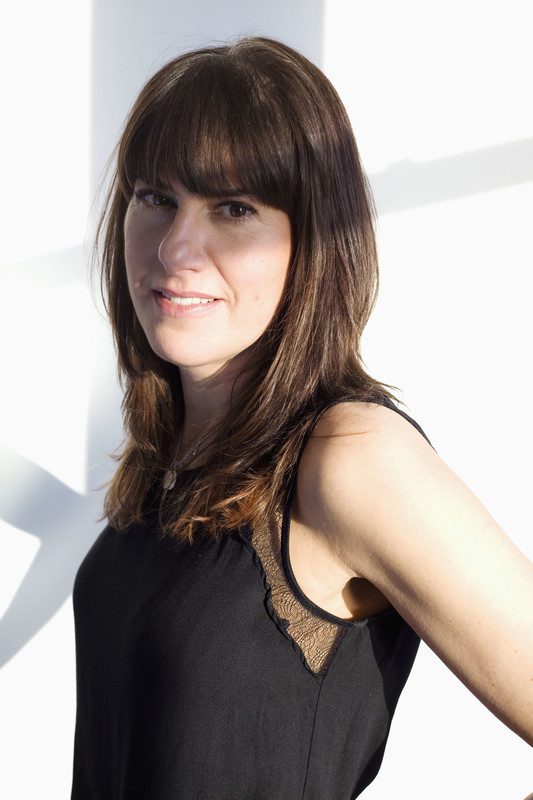
Director Biography – Marisa Fox
An award-winning and nominated print, broadcast and digital journalist, Marisa Fox has produced social impact campaigns for Hearst and has written on music, culture, gender, genocide, sexual trauma and extremism for The Daily Beast, CNN, Ms.,The New York Times, Elle, Health, Rolling Stone, The Forward and Ha’aretz, where she was a U.S. correspondent. She’s also a “she source” for the Women’s Media Center, started by Gloria Steinem.
My Underground Mother, Fox’s directorial debut, led her to curate and unveil a monument honoring the survivors of Jewish women’s camps in the Czech Republic, and a digital exhibit of women’s testimonies curated with USC’s Shoah Foundation. She holds an MS and BS from Northwestern University’s Medill School of Journalism and a Bachelor of Arts in French Language & Literature. Her graduate magazine project won a National Journalism Society Award.
Director Statement
My mother’s fractured life story haunted me. Even as a girl, I found the dots in her life story didn’t connect. But the more questions I asked, the more she pushed me away. Her secrecy drove a wedge between us and led me to pursue journalism; a field predicated on questions and the type of factual answers she could never provide. In college at Northwestern, I wrote an editorial about a Holocaust denying professor, which elicited hate mail from David Duke. My mom’s response stunned me: “Change your name and transfer.” Twenty years after she died, I learned she had done just that. She changed her identity when she moved to the United States and concealed that she had been a Holocaust survivor. Why had she done that?
That question fueled what would become a more than 10-year quest for answers. I learned my mother had been a prisoner of a Nazi-run Jewish women’s camp called Gabersdorf, and then I found a camp journal which contained a page she wrote as a teenager under a different name: “Behira,” which means clear or bright in Hebrew. Her prose shook me to my core. How little did I know her. Though I held her hand as she passed, I realized she died alone. This tragic reality compelled me to mine the depths of all she had tried to suppress. And that’s when I learned that my mother’s secret was far from unique.
When I began researching her past, camps like Gabersdorf were barely recognized by major institutions like the U.S. Holocaust Memorial Museum, and women’s narratives were mere footnotes in this history. But Gabersdorf, which finally made it into the 2nd volume of USHMM’s “Encyclopedia of Camps & Ghettos,” was part of a vast, underground network of 177 camps, where girls as young as 13 were exploited to fuel the Nazi war machinery. Tens of thousands of Jewish women survived in remote camps just like Gabersdorf, based in remote villages throughout the Czech Republic, Poland and Germany. They had been abducted from their ghettos, trafficked to remote areas as prisoners of factories, fed just enough to withstand grueling 12-hour shifts, beaten and tortured, forced to live in overcrowded barracks where lice and vermin were rampant, and though they somehow held on to life for more than four years, they slipped through history’s cracks.
I’m often asked: “Didn’t you see your mother’s tattoo? Well, no, I explain, only Auschwitz prisoners were inked. Perhaps that fact enabled my mother to pass, but it doesn’t explain why so many women became invisible survivors. As I read my mother’s journal page, I was struck by the line: “We are left to the whims of our ‘honorable’ leader.” She seemed to be alluding to the sexual abuse more graphically documented on other pages by her fellow teenage inmates. When I first asked Gabersdorf survivors about their raw narratives, I was met with awkward pauses. It took a while to get them to trust me and open up. Even so, their accounts differed. What one woman viewed as sexually coercive, another viewed as
agency. The truth was elusive, and for good reason. Rape is more than physical. It crushes the soul. It’s the ultimate “shanda” or shame in the Jewish tradition. Why would anyone want to share such a degrading chapter with a husband or child? No wonder it’s taken 80 years to unpack the extent of sexual trauma women were subjected to during the Holocaust.
Recently declassified files found at United Nations War Crimes Commission Archives attest that rape, forced prostitution, sterilization, nudity and corporal shaming were so commonplace that prosecutors had enough evidence to charge perpetrators at postwar tribunals. But these cases were dropped at the Nuremberg Trials, and rape was never included as a war crime. Predators were exonerated and survivors, like my mom, silenced by a world that had a callous indifference for their suffering. Rape wasn’t recognized as a war crime until the International Criminal Tribunal of Rwanda convicted Jean-Paul Akayesu in 1998, five years after my mother died.
It has taken subsequent genocides, from Rwanda and Bosnia to contemporary conflicts like the Russian invasion of Ukraine, ISIS’ sex trafficking of Yazidi girls, as well as October 7th rape perpetrated by Hamas in Israel, for the world to see that “war and rape go hand in hand,” as Nuremberg prosecutor Benjamin Ferencz explained. Still, the world isn’t treating survivors of these crimes any better. Though Hamas livestreamed the atrocities they unleashed on girls and women in Israel, Oct. 7th rape denial is rampant, and Ukrainian survivors of Russian sexual torture are a long way from seeing justice. We must learn from my mother’s history, not only for today’s survivors, but for the sake of future generations.
As a second-generation Holocaust survivor who never knew I was one, I think about how different my relationship with my mother might have been had the postwar world treated women survivors more humanely. I think about how vital it was for my mother to build her narrative as a victor, not a victim. “Being able to construct your story is a crucial part of treatment,” a therapist treating Nova survivors in Israel told me. “And being able to tell a story that describes the horrors of victimization but also celebrates your agency in overcoming it is a major step in the healing process. It means you control the trauma; it no longer controls you.”
My mother’s story was essential for her self-preservation, something I would never diminish. But being able to hold both truths–victim and hero– is the one that can free survivors from the shame that kept my mother a stranger from me. The story I want to tell joins both sides of her into a beautiful whole and takes that girl I never knew out of the shadows and into the light, where she belongs.